
Measure How Well Your Lungs Are Working
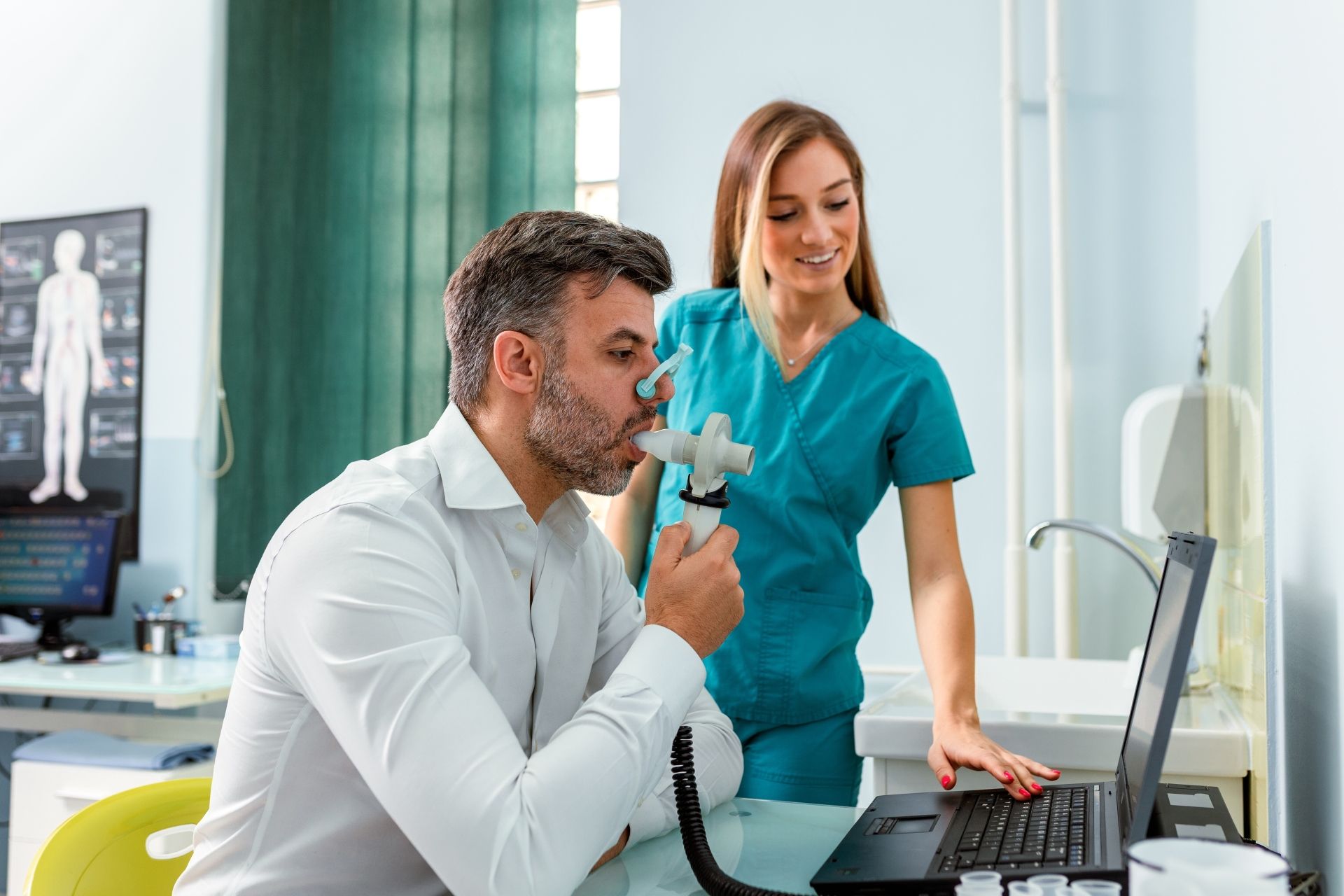
Pulmonary function testing in El Paso evaluates lung capacity and airflow to support asthma diagnosis and management.
When you experience shortness of breath, wheezing, or chest tightness in El Paso, objective lung measurements help determine whether asthma is present and how severe it is. Pulmonary function testing uses calibrated diagnostic equipment to measure how much air your lungs can hold and how quickly you can exhale, giving your provider data that goes beyond what symptoms alone can reveal. Access Allergy and Immunology performs this testing in-office to support accurate diagnosis, monitor treatment response, and guide medication adjustments over time.
The test involves breathing into a mouthpiece connected to a spirometer, which records your airflow and lung volume during different breathing maneuvers. You'll be asked to take a deep breath and blow out as hard and fast as you can, then repeat the process several times to ensure consistent results. Testing is non-invasive and performed in-office using calibrated diagnostic equipment. In El Paso, where air quality fluctuations and seasonal allergens can worsen respiratory symptoms, regular lung monitoring helps distinguish between asthma flare-ups, environmental irritation, and other respiratory conditions.
If you need a clearer understanding of your lung function or want to confirm whether your asthma treatment is working, Access Allergy and Immunology can schedule pulmonary function testing in El Paso and review the results with you the same day.
Call us and take the first step toward a healthier, allergy-free life.
What the testing process involves and what it shows
Your appointment begins with a brief explanation of the breathing maneuvers you'll perform and how the equipment measures your effort. In El Paso, pulmonary function testing is used to establish a baseline for newly diagnosed asthma patients and to track changes in lung capacity for those already on medication. You'll sit upright, wear a nose clip to ensure all air moves through the mouthpiece, and follow verbal cues from the technician during each test cycle.
After testing, you'll see a printout showing your lung volume, airflow rates, and how your results compare to expected values based on your age, height, and gender. If your airflow is significantly reduced, that suggests airway obstruction common in asthma. If your numbers improve after inhaling a bronchodilator during the test, that confirms the obstruction is reversible, which supports an asthma diagnosis and helps determine medication effectiveness.
Results are reviewed with patients to create or refine a personalized asthma management plan. Regular testing supports safer, more effective long-term respiratory control by showing whether your current medications are keeping your airways open or whether adjustments are needed. Access Allergy and Immunology uses these findings to guide inhaler selection, dosing changes, and decisions about adding or reducing controller medications based on objective data rather than symptom reports alone.
Most people have a few questions before their first test
Patients in El Paso often wonder what the test feels like, whether they need to stop their medications beforehand, and how the results affect their treatment plan.
If you're managing asthma without recent lung function data or if your symptoms have changed despite medication, testing provides measurable information that supports better decision-making. Access Allergy and Immunology offers pulmonary function testing in El Paso with same-day result review and medication adjustments based on what your lungs are actually doing, not just how you feel.
Let’s set you up with an appointment!
Whether you have a simple question, want to speak to someone or would like to schedule an appointment to get the conversation started, fill out this form so that we may connect and get the conversation going.
Schedule an appoinment
Contact Us
We will get back to you as soon as possible.
Please try again later.